
3:26 p.m.
Dear colleagues,
On behalf of the WiNoDa Knowledge Lab<https://winoda.de/en/english/> at the Museum
für Naturkunde Berlin, I would like to invite you to our new season of webinars, ranging
from partecipatory research to hands-on tools to harmonise your datasets and build sound
recognition software. All webinars are free of charge and in English but registration is
necessary (the link can be found in the title of the webinar). Feel free to circulate this
email among your network.
We would love to see you there!
[cid:image003.jpg@01DC2D3A.20492590]
Participatory Research and Public Engagement in Context: Frameworks, Practices, and
Institutional
Transformation<https://winoda.de/en/event/webinar-participatory-research-and-public-engagement-in-context/>
October 14th, 11am CET
Participatory research and public engagement foster collaboration, shared learning, and
responsibility in science. This webinar introduces key formats of participation, explores
practices in Germany, the UK, the Netherlands, and France, and shares insights from
institutional change at the Museum für Naturkunde Berlin.
Ideal for researchers and practitioners, looking to integrate participation into their
work in meaningful, sustainable ways.
[cid:image005.jpg@01DC2D3A.20492590]
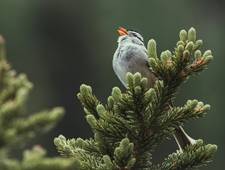
Practical Passive Acoustic Monitoring with Audiomoth for Birds, Bats and
Orthoptera<https://winoda.de/en/event/webinar-practical-passive-acoustic-monitoring-with-audiomoth/>
October 28th, 11am CET
Passive acoustic monitoring lets researchers study animals by recording their songs and
calls. With affordable devices like Audiomoths and powerful tools like opensoundscape,
it’s now easier than ever to classify recordings, build custom models, and monitor
multiple species at once.
Join our beginner-friendly webinar to explore how to get started with Audiomoths and learn
a workflow for analyzing birds, bats, and orthoptera.
[cid:ada1ece9-6e50-479d-8414-4dfc4cef98fd]
From Messy Tables to Meaningful Insights: LLMs in Biodiversity Data
Curation<https://winoda.de/en/event/webinar-llms-in-biodiversity-data-curation/>
November 11th, 11 CET
Struggling with inconsistent species names, messy columns, or vague locality notes? Learn
how Large Language Models (LLMs) can simplify cleaning, harmonizing, and georeferencing—no
data science degree required.
This webinar will show live, reproducible workflows, from fixing spreadsheets to turning
natural-language place descriptions into GPS coordinates. Get to analysis faster with
practical, beginner-friendly tools.
[cid:ed1c46e2-bbb7-4046-97f0-d33f86b5ad8a]
A New Tool for Planning Data Management in Biodiversity, Ecological, and Environmental
Research<https://winoda.de/en/event/webinar-data-management-plan/>
December 16th, 11am CET
Research data is growing fast—good management starts with a Data Management Plan (DMP). A
DMP defines how your project’s data will be created, handled, preserved, and shared,
ensuring compliance and supporting FAIR principles.
In this session with GFBio and the BiodiversiTea team, you’ll get a clear introduction to
DMPs, a guided tour of GFBio’s free support service, and hands-on experience with the DMP
Tool.
To keep up to date with our activities, you can always sign up for our monthly
Newsletter<https://lists.gbv.de/listinfo/winoda-newsletter>
<https://lists.gbv.de/listinfo/winoda-newsletter> or follow us on
LinkedIn<https://www.linkedin.com/company/winoda/> and
Mastodon<https://nfdi.social/@WiNoDa>.
Kind regards,
Ginevra Bellini
~~~
Dr. Ginevra Bellini (she/her_sie/ihr)
Community Manager
WiNoDa Knowledge Lab
Email: ginevra.bellini@mfn.berlin<mailto:ginevra.bellini@mfn.berlin>
WiNoDa Knowledge Lab web page<https://winoda.de/en/english/> | WiNoDa
LinkedIn<https://www.linkedin.com/company/winoda>
Museum für Naturkunde Berlin
Leibniz-Institut für Evolutions- und Biodiversitätsforschung
Invalidenstraße 43
10115 Berlin | Germany
[cid:image010.png@01DC2D38.0FB34E60]


153
days inactive
153
days old
training4lifescience@lists.nfdi.de
0 comments
1 participants
participants (1)
-
 Bellini, Ginevra